🌟 About Shri Ram Janmabhoomi
Shri Ram Janmabhoomi is a revered pilgrimage site in Ayodhya, traditionally regarded as the birthplace of Lord Rama. It stands on the banks of the Sarayu River and is now home to the Ram Mandir, consecrated in January 2024. The location has immense religious, cultural, and political significance in India.
Key facts
Location: Ayodhya, Uttar Pradesh, India
Coordinates: 26.7956° N, 82.1943° E
Temple inauguration: January 22, 2024
Managing trust: Shri Ram Janmabhoomi Teerth Kshetra
Architecture: Nagara style; height ≈ 161 ft (49 m)
Historical background
For centuries, Hindus have venerated this site as the Janmabhoomi—the birthplace of Rama. In the 16th century, the Mughal-era Babri Masjid was built there, leading to long-standing religious disputes. Tensions culminated in the mosque’s demolition in 1992 and nationwide unrest. In 2019, the Supreme Court of India awarded the land to Hindus and ordered an alternate plot for Muslims, enabling construction of the Ram Mandir .
Architecture and design
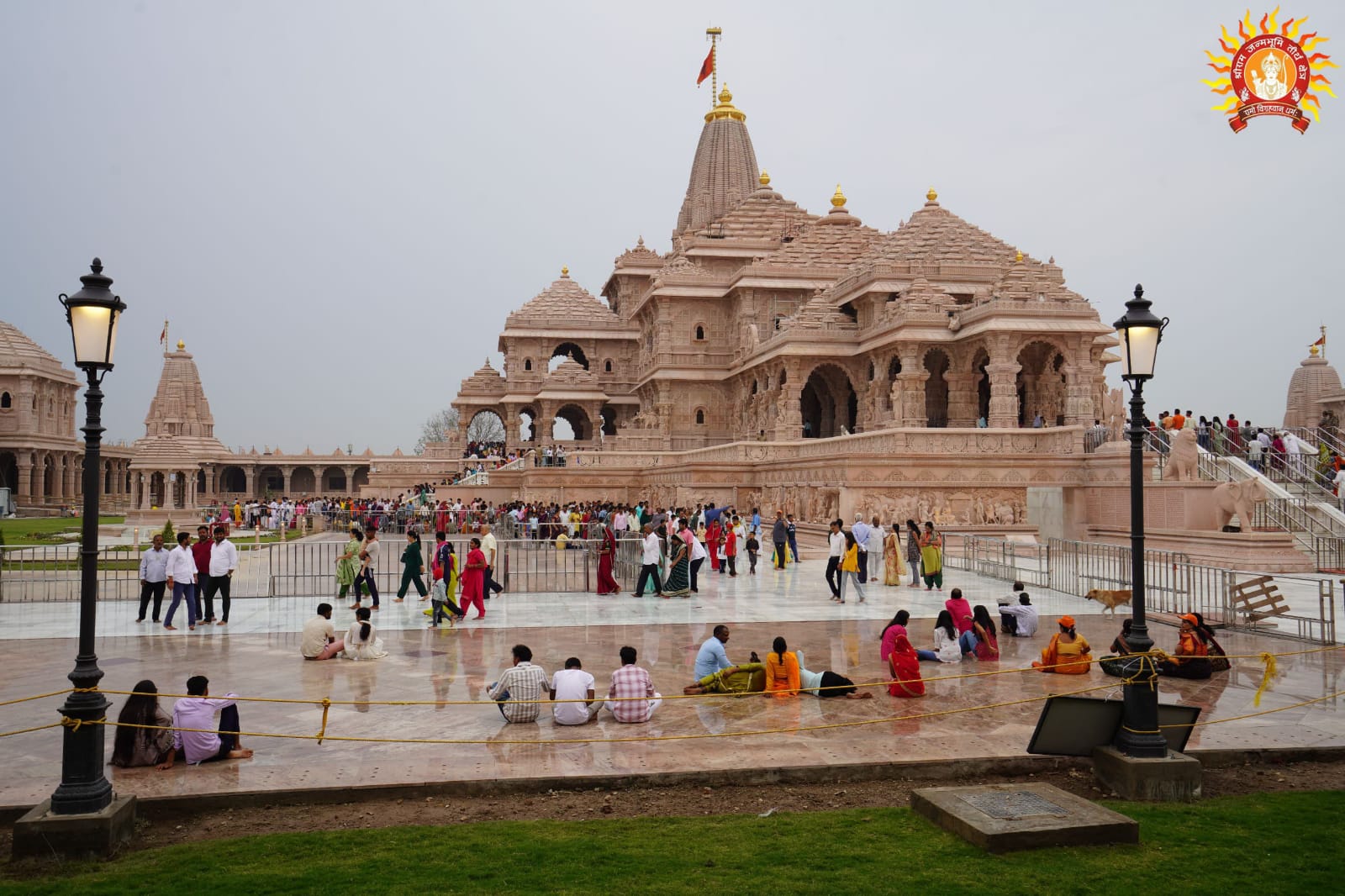
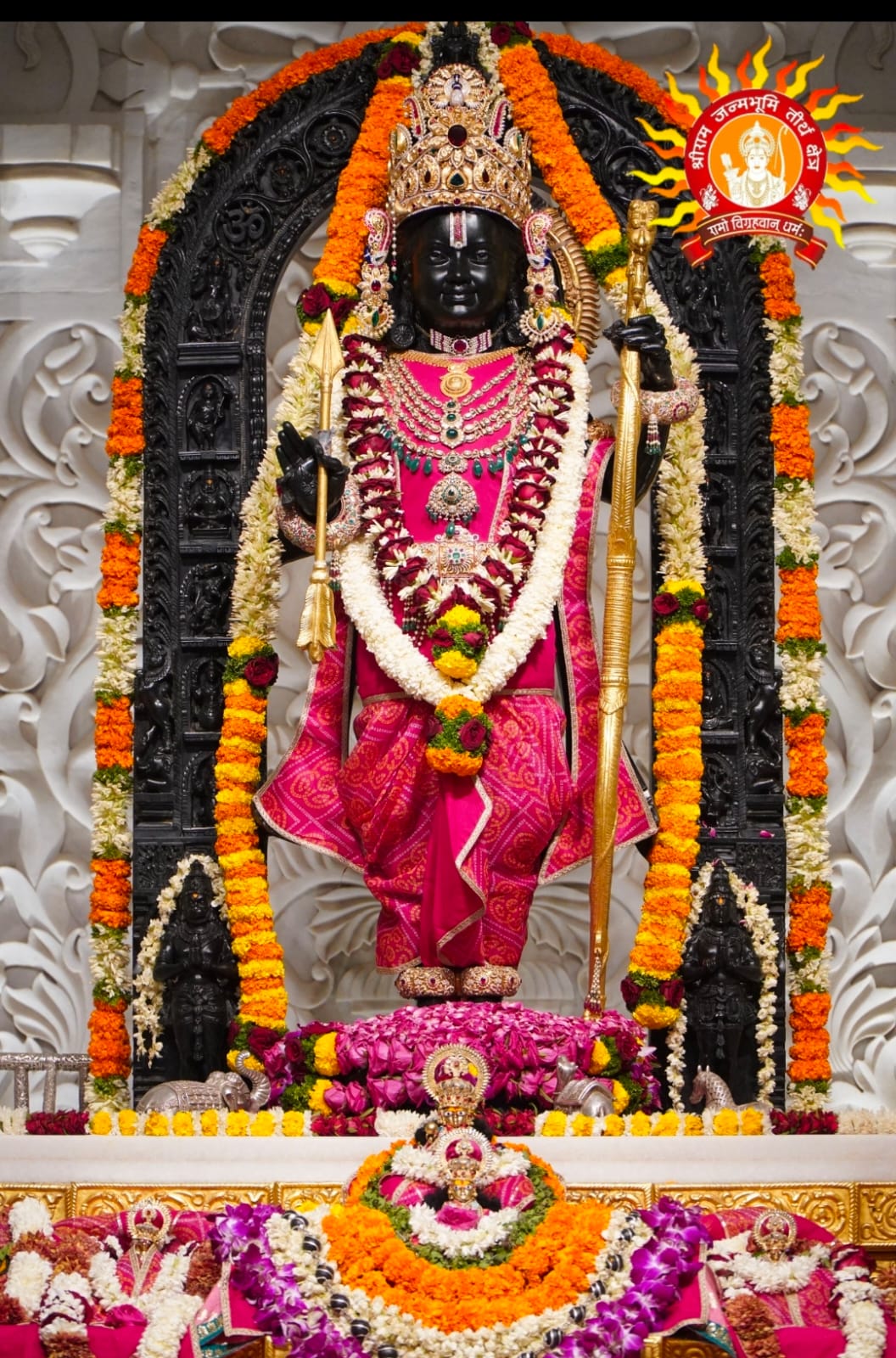
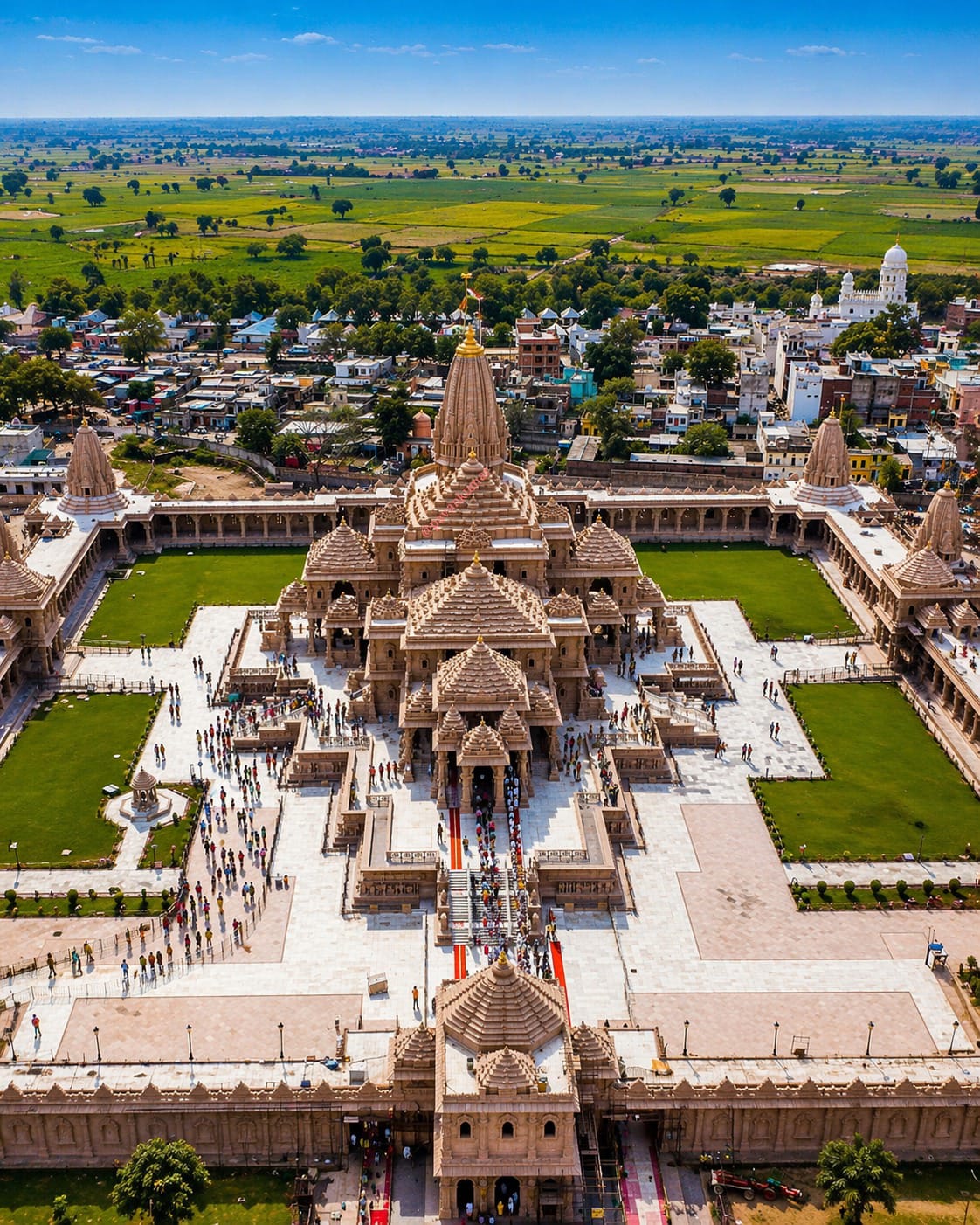
The temple, designed by Chandrakant Sompura in the Nagara style reminiscent of the Sun Temple at Konark, uses pink sandstone from Rajasthan without iron or steel. It features three floors, twelve gates, and five mandapas (assembly halls). The inner sanctum houses the murti of Ram Lalla, depicting Rama as a five-year-old child. The complex spans roughly 70 acres, including landscaped gardens and modern facilities .
Religious and cultural significance
Shri Ram Janmabhoomi symbolizes the devotional center of the Ramayana tradition and an enduring emblem of Ram Rajya—the ideal of righteous governance. Its inauguration drew millions of devotees and marked a milestone in modern Indian religious and cultural life .
Visiting information
The temple complex is open daily from about 6 a.m. to 9 p.m., with major aartis in the morning, noon, and evening. Photography is restricted inside. The site lies near Ayodhya Junction railway station, with access via secured pathways and amenities for devotees.